Underfloor heating is synonymous with luxury and comfort, but incorrect installation can quickly turn into your worst nightmare. To enjoy warm floors without cracked tiles, strict technical rules must be followed—from laying the pipes to the final finishing.
The importance of expansion joints and proper screed reinforcement
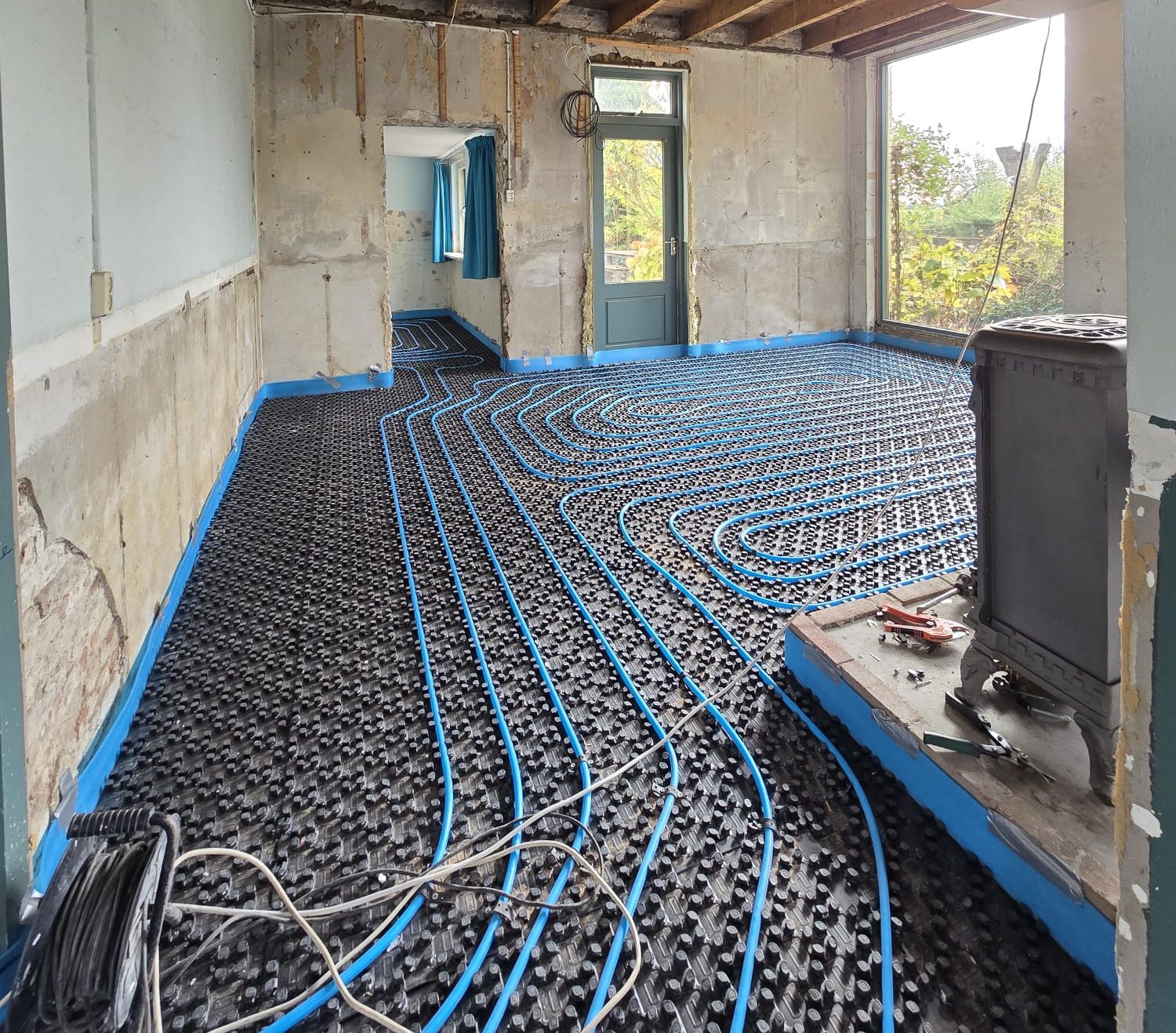
The screed layer above underfloor heating is thermally active, meaning it expands and contracts with temperature changes. The lack of proper edge insulation and expansion joints at thresholds is the fastest way to develop cracks that transfer to your tiles or laminate flooring. Using proper fiber reinforcement or steel mesh stabilizes the floor slab and prevents deterioration.
A crucial element often overlooked by “all-round” teams is construction chemistry specifically designed for heating systems. Using a simple plasticizer is not enough—at Renoverend, we emphasize a screed with optimal thermal conductivity that fully surrounds the heating pipes, eliminating air pockets that act as insulation and significantly reduce system efficiency.
Equally important is the thickness of the layer above the pipes:
a layer that is too thin causes the “zebra effect” (uneven heating), while a layer that is too thick increases thermal inertia, causing the system to respond with delays of several hours. Our experience allows us to precisely adjust screed parameters to the planned finishing, achieving the perfect balance between heating speed and durability.
The heating protocol: patience pays off
The biggest mistake is turning the heating on at full power too quickly or installing flooring on “fresh” concrete. The heating protocol should last at least 21–28 days and involves gradually increasing the water temperature in the system. This process allows the screed to release stress and moisture in a controlled way, properly preparing the surface for the final flooring.
“Proper underfloor heating installation is a process that cannot be rushed—only strict adherence to technical protocols guarantees a floor that will perform flawlessly for years.” – Robert Siutkowski, CEO of Renoverend
Material selection and thermal efficiency
Not every material is suitable for underfloor heating—ceramic tiles and natural stone conduct heat best, while wood requires careful consideration of thermal resistance. It is also essential to use the right flexible adhesives and grouts that can withstand constant temperature changes without deteriorating.
A properly installed underfloor heating system is an investment that reduces energy bills and increases property value.
FAQ
1. Can I install wooden flooring over underfloor heating?
Yes, but it should be engineered wood with suitable thermal conductivity.
2. What if a pipe breaks under the screed?
We use multilayer pipes without joints in the floor, which virtually eliminates the risk of leaks.
3. How long should the screed dry before tiling?
Typically one week per centimeter of thickness, plus the heating protocol time.
4. Is underfloor heating suitable for people with allergies?
Yes, it reduces dust circulation compared to traditional radiators.
5. Do I need a special boiler for underfloor heating?
The system works with most boilers and heat pumps; only a mixing unit is required.